
They were young, brazen, and in the right place at the right time.
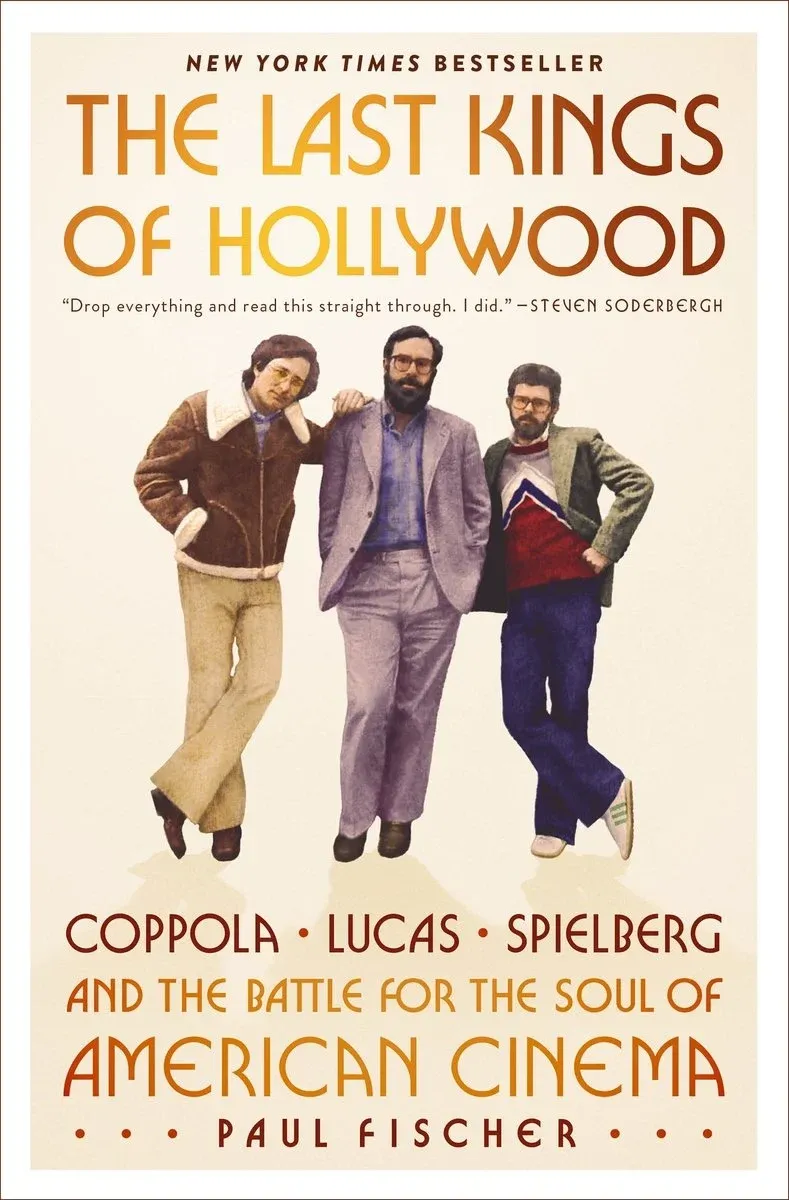
In The Last Kings of Hollywood: Coppola, Lucas, Spielberg–and the Battle for the Soul of American Cinema (just released from MacMillan), author and film producer Paul Fischer chronicles the transformation of Hollywood beginning in the late 1960s. How movies were made, what they were about and how the industry balanced creativity with commerce all shifted during during the 70’s and after. Fischer tracks these changes by training his lens on three men who had an outsize impact on cinema over the past half century, brilliant filmmakers who were also friends and rivals, flawed human beings and talented visionaries.
Sometimes intentionally, sometimes by chance, the work of Francis Ford Coppola, George Lucas, and Steven Spielberg–as directors, screenwriters, and producers, and especially during the 1970s up to the early '80s–indelibly altered what studios and audiences expect from a movie. In Fischer's well-written and accessible telling, these three filmmakers were key in making American film into something more, both highly profitable as well as personal and artistic–at least for a time.
Coppola, the eldest of the three, comes off as a kind of wunderkind in the book, a pied piper who inspired a new generation of aspiring young filmmakers that included not only Lucas and Spielberg, but also Martin Scorsese, Brian De Palma, and others. At the start of the '60s, he earned extra cash directing softcore “skin flicks” while still enrolled at UCLA's newly-formed film program (Jim Morrison, frontman for the Doors, was his roommate at one point). Upon graduation he directed B-movies for Roger Corman, and by the end of the decade had directed Fred Astaire, shot his first feature, and got hired to write the script for Patton (which he would later win an Academy Award for). Despite this rapid success, young Coppola dreamed of creating his own film studio in San Francisco, an alternative scene, less corporate, where smaller and more personal films could be made. At first, Lucas (who met Coppola on the set of Finian's Rainbow) follows him to the Bay Area to build this dream, along with many others, but none of them seemed skilled (or interested) in management or logistics. Coppola's strengths were more in dreaming big than managing the logistics of an indie film studio. Within a year, crippled with debt, he reluctantly accepted the “sell out” gig of directing The Godfather (1972) so he could pay his bills and get back to funding his "smaller, more intimate films.” No one foresaw that his Shakespearean interpretation of Mario Puzo's potboiler would become the highest grossing film of all time, as well as one of the most critically acclaimed.
In fact, much of his and the others' success had a lot to do with chance; their brilliance manifesting in how they adapt to difficult circumstances. When on location in Martha's Vineyard to shoot Jaws, Spielberg planned multiple shots with the mechanical shark; it was only because of its malfunctioning than he was forced to innovate, resulting in a blockbuster in 1976 that surpassed The Godfather in ticket sales (though Spielberg would not become respected as a "serious filmmaker” until Schindler's List in 1993). Of the three, Spielberg emerges in the book as the most consistently successful– perhaps because he seemed less interested in altering the entire film industry, and more passionate about becoming Hollywood's most popular and highly paid director.
Fischer dives deep into the complexities and contradictions of Lucas' worldview. On the one hand, the creator of the Star Wars franchise saw himself as an indie filmmaker, a Hollywood outsider; he loathed playing by the rules or being told what to do. Between Star Wars (1977) and the Indiana Jones franchise (which started with Raiders of the Lost Ark in 1981), Lucas built his own empire, a business just as obsessed with the bottom line as the suits he railed against in his youth when he was making THX 1138 (1971) and American Graffiti (1973). The book makes a strong case that Lucasfilm played a significant role in shaping our current entertainment media landscape, from “high concept” films and creating “packages” to the ever greater use of special effects, CGI, and AI tools in cinema franchises.
Like all long-term friendships of people with huge egos, these Last Kings of Hollywood helped each other, betrayed one another, and were inspired by one another's work. After seeing The Godfather, Spielberg said he wanted to quit making films; “that was a perfect film,” he said, “how could anyone top it?" Coppola, the first to get insanely wealthy, provided crucial financial support to Lucas when no one else would, and defended the merits of THX 1138 to the studio executives when Warner Bros didn´t want to distribute it. After his WWII comedy 1941 bombed in 1979, Lucas made sure Spielberg was kept on as director for Raiders, inspired by the adventure serials they enjoyed as kids.
Though not given as much ink as the book's three titular characters, Brian De Palma and Martin Scorsese play fascinating supporting roles in Fischer's narrative. De Palma was responsible for creating the 'scrawl' at the top of “A New Hope”, as no one understood Lucas' "space opera" when he screened a work print for friends; and he was originally offered the chance to direct Taxi Driver (1976), before recommending his pal Marty from New York take the gig. Coppola, initially uninterested in doing sequels, originally recommended Scorsese should direct The Godfather, Part II (1974).
Fischer wisely ends his book just after the 1970s and the so-called New Hollywood era. Coppola took the biggest gambles, Lucas had more interest in film technology, and Spielberg wanted to have as many opportunities to make successful pictures. In their own ways, each challenged the established orthodoxy at the time, and their relentless ambition coupled with extraordinary early success gave them unimaginable power and influence. The Last Kings of Hollywood gives readers a front row seat to a show filled with excitement, ingenuity, hubris, success, setback, and more.

Other stories from The CRUSH Letter of interest:
 Crush PoV
 Crush PoV
 Dish Stanley
I'm Dish and I write a weekly newsletter about life, love, and culture for those 40+. Because midlife and beyond is so much cooler than they said it would be. Hell yes, sign me up.